How a Reusable Water Bottle Gets From Factory to Consumer — And Why It Matters
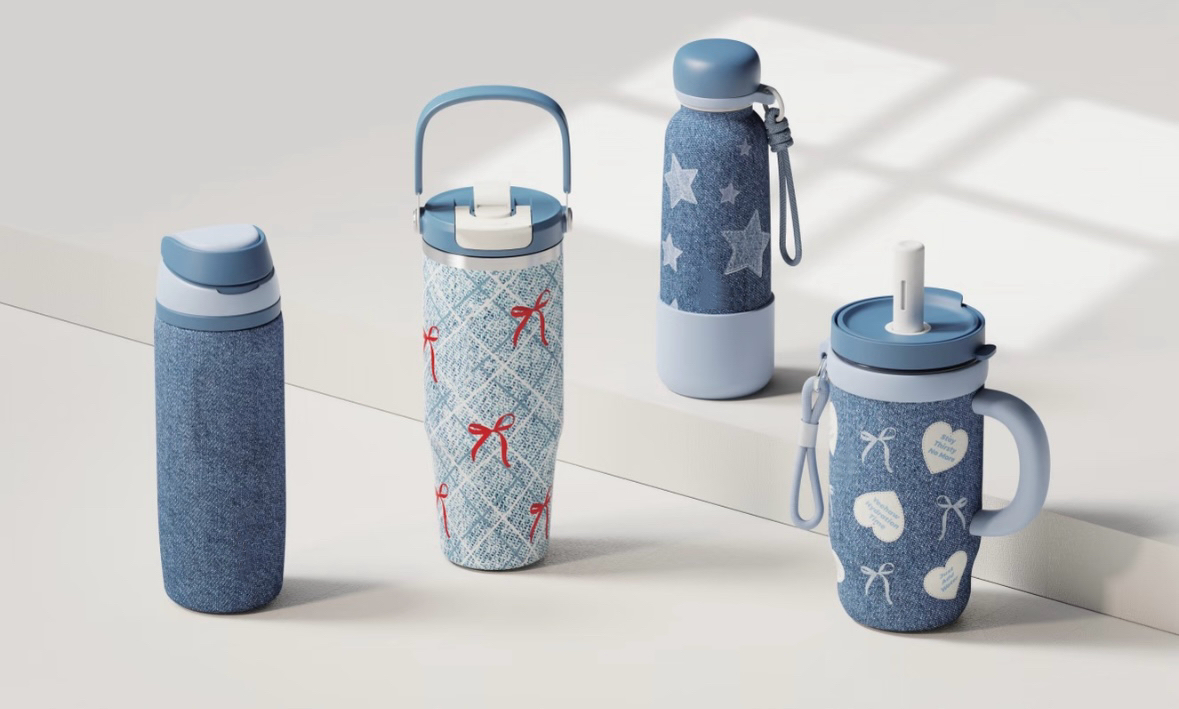
Most people who buy a reusable water bottle never think about what went into making it. They pick it up because it looks good, holds the right amount, and fits in a bag. But behind that simple object is a production chain with a lot of decision points — and the choices made at each one show up in the finished product, whether the buyer notices or not.
Understanding how a bottle actually gets made helps explain why two products that look nearly identical on a shelf can perform very differently after six months of daily use.
It Starts With the Steel
The raw material for a stainless steel water bottle is coiled sheet metal, typically arriving at the factory in rolls. The grade of that steel — most commonly 304 (also written as 18/8) for food-contact applications — determines how the bottle will resist corrosion, whether it will impart any taste to liquids, and how it will hold up over years of use.
The sheet gets cut into blanks, then deep-drawn through a series of progressive dies that gradually shape the flat material into a cylinder. This drawing process is repeated in stages — rushing it causes tearing or uneven wall thickness. A well-run factory monitors wall thickness at every stage. A less careful one checks the final product and hopes the middle was fine.
The double-wall construction that makes a bottle insulated requires two separate formed cylinders: an inner and an outer. These are assembled together, and the space between them is evacuated to create the vacuum. The quality of that vacuum — how well the seal holds over time — is what separates a bottle that keeps coffee hot for six hours from one that performs that way for the first month and then gradually doesn’t.
Surface Treatment: Where Most Visible Differences Are Made
Once the steel body is formed and assembled, it goes through surface treatment. This is where the bottle gets its color, finish, and any texture.
Powder coating involves applying a dry powder electrostatically, then curing it in an oven. The result is a durable, even matte or satin finish that can be matched to virtually any color. It also creates a surface that works well for laser engraving — the laser removes the coating to reveal bare steel underneath, creating a clean two-tone effect.
Electroplating adds a thin metallic layer for effects like rose gold or chrome. Spray paint is cheaper but chips more readily under hard use. The finish a manufacturer uses says something about their expectations for the product’s lifespan.
This is also the stage where logo application happens: screen printing for bold flat designs, pad printing for smaller details, laser engraving for permanent marks that won’t fade or peel regardless of how many times the bottle goes through a dishwasher.
Quality Control Before It Ships
Reputable factories test bottles at multiple points before they leave. Leak testing — pressurizing the sealed bottle and checking for any air loss — catches vacuum failures that would only show up as poor insulation performance in the customer’s hands. Drop testing checks whether the coating and body withstand normal impacts. Temperature retention testing verifies that the insulation actually performs to spec.
The gap between factories that do this systematically and those that do it sporadically is one of the main reasons buyers who’ve worked with multiple suppliers talk about consistency. A factory that runs proper QC tends to produce the same bottle every time. One without that discipline produces good bottles sometimes and borderline ones other times, with no reliable way to predict which run will be which.
The Role of the Manufacturer in Brand Customization
For brands ordering custom bottles, the manufacturer is also the design and engineering partner for that product. The best water bottle manufacturers function as more than a production facility — they advise on what’s technically feasible, flag issues with artwork before it goes to production, and produce pre-production samples for approval before a full run begins.
That pre-production stage is where a lot of problems get caught or missed depending on how seriously the factory takes it. A sample that gets approved too quickly — because the timeline is tight or the factory wants to move to production — can result in thousands of units with a logo that’s slightly off-center, a color that doesn’t match the brand spec, or a lid that doesn’t seat correctly.
The factories that treat sampling as a genuine checkpoint rather than a formality are the ones brands tend to stay with long-term.
From Port to Shelf
After production, bottles are packed — individually or in bulk depending on the order type — and move through export documentation, freight booking, customs clearance, and final delivery. For orders manufactured in China, ocean freight to North America or Europe typically takes three to five weeks. Air freight is faster but adds significant cost per unit at any meaningful volume.
The total time from confirmed order to product in hand is typically eight to twelve weeks for a custom run, including sampling and pre-production approval. Brands that account for this in their planning rarely have problems. Brands that don’t tend to discover it at the worst possible moment.
Why This Chain Matters to the End Buyer
A consumer who buys a water bottle at retail rarely knows anything about this process. But they experience the outcomes of it every day: whether the lid seals, whether the insulation holds, whether the coating chips, whether the bottle still looks the same after a year as it did on the day they bought it.
The decisions made at the factory — what grade of steel, how carefully the vacuum is formed, what kind of surface treatment is applied, how rigorously the finished product is tested — are all invisible to the buyer. They show up only in whether the bottle is still earning its place on the desk two years later or sitting forgotten at the back of a cabinet.
That’s why the choice of manufacturer matters as much as it does to anyone building a product around a reusable bottle — and why brands that spend time getting that choice right tend to have fewer customer service conversations about it afterward.