How Chinese Furniture Groups Are Changing the Way Global Developers Source Interior Fit-Outs
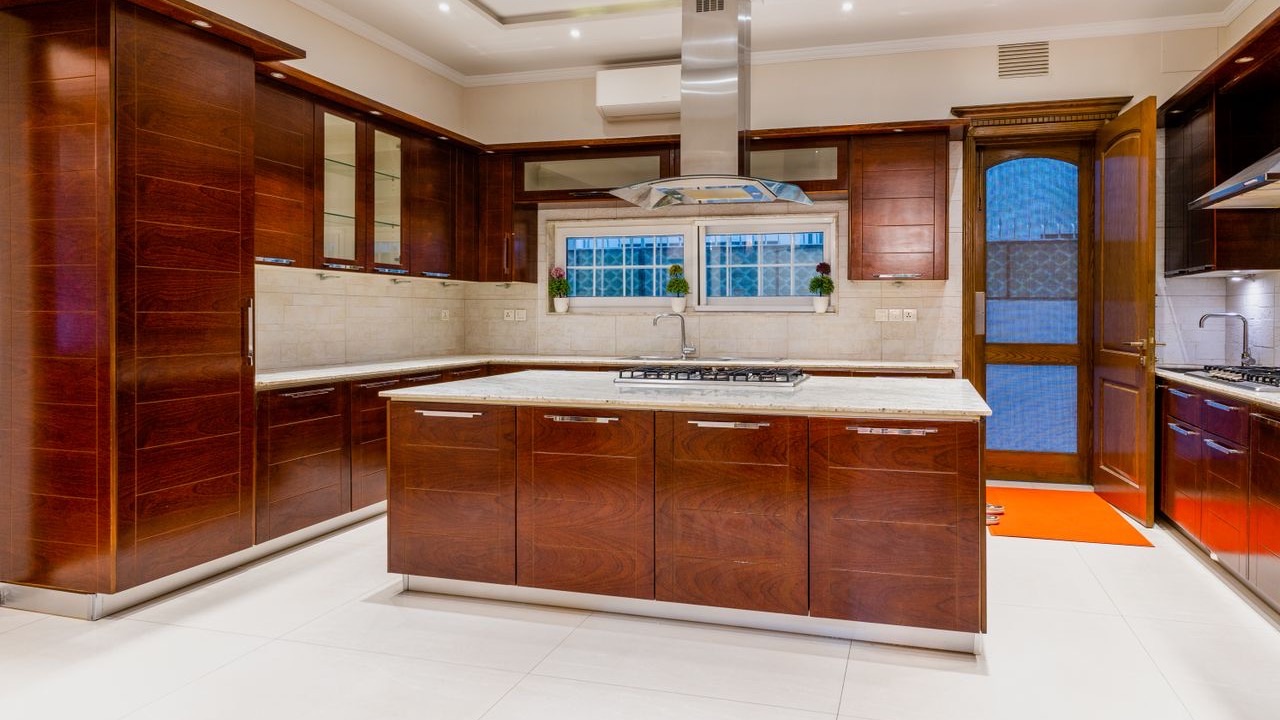
For a long time, international property developers sourcing interior furniture for large-scale residential projects had a standard approach: buy European or North American branded products for flagship units, and source lower-cost items from a mix of regional suppliers for everything else. That model worked well enough when projects were smaller and quality expectations for mid-range units were lower. It’s increasingly inadequate for the scale and specification standards that modern residential development demands.
What’s changed isn’t just the cost advantage of Chinese manufacturing — that’s been understood for decades. What’s changed is the capability layer. Large Chinese furniture groups are now operating at a level of design sophistication, production capacity, and certification compliance that makes them viable primary suppliers for high-specification projects, not just the budget tier of a mixed sourcing strategy.
The scale problem that European suppliers can’t solve
A mid-size residential development — 200 to 500 units — requires furniture coordination across dozens of room types, potentially hundreds of SKUs, and a delivery window that fits within the construction completion schedule. European premium brands are built for retail and high-end contract work, not for the production volumes and delivery logistics that a development project at this scale requires.
Chinese furniture groups built for the whole-house customization market operate at a fundamentally different scale. A manufacturer producing 2 million units annually has production planning, supply chain depth, and logistics infrastructure that a smaller operation simply cannot replicate. When a developer needs 400 identical kitchen cabinet configurations delivered to a site within a six-week window, the question isn’t price — it’s whether the supplier can actually execute the order at that scale without quality drift.
This is where the competitive position of large Chinese furniture groups has shifted most significantly. The capability to take a large, complex order and execute it consistently at volume is now a differentiator, not just a baseline expectation.
What whole-house sourcing actually changes for developers
The traditional multi-supplier approach for a residential fit-out means a developer is managing separate contracts with a kitchen cabinet supplier, a wardrobe supplier, a door and frame supplier, and possibly a wall panel supplier. Each has its own lead times, quality standards, and potential failure modes. When a cabinet delivery is delayed, it holds up the wardrobe installation. When a door frame dimension doesn’t match the cabinet run, someone is paying for the rework.
Consolidating into a single supplier for multiple furniture categories doesn’t just reduce vendor management overhead — it changes the design integration dynamic. When kitchen cabinets, wardrobes, wooden doors, and wall panels are coming from one production system, the dimensional tolerances are shared, the finish options are coordinated, and the design language is consistent across room types without requiring an additional specification layer to manage it.
For developers who are positioning mid-range units as design-coherent interiors rather than assembled furniture, this integration has real value that goes beyond the cost line.
Certification and compliance for international projects
The compliance picture for Chinese furniture exports has improved significantly over the past decade. Products leaving China for European, Australian, or North American markets need to meet formaldehyde emission standards (E1 or E0 under European EN standards, CARB Phase 2 for North American markets), fire resistance ratings for certain applications, and material safety certifications for components that come into contact with food preparation surfaces.
Large Chinese furniture manufacturers that serve international markets maintain third-party certification for these requirements as standard. The certification infrastructure — laboratory testing relationships, documentation systems, audit readiness — is built into the operation rather than being something to negotiate per order. For developers whose specifications require certified product, this is a practical necessity, not a luxury.
The design investment that changes the conversation
The most visible shift in how Chinese furniture groups are positioned for international markets is the design investment. A company that has won international design awards and maintains a design team capable of working to contemporary European residential aesthetics is operating in a different category than a commodity furniture exporter.
This matters for developers because the fit-out is increasingly part of the product they’re selling to end buyers. Interiors designed to look assembled from budget components undermine a project’s market positioning in ways that are difficult to recover from. When a furniture supplier’s design capability is strong enough that the fit-out reads as intentional and coherent, it adds to the project rather than being something the developer has to compensate for in other ways.
How the sourcing conversation is changing
Developers who have made the shift to sourcing from large Chinese furniture groups describe a different kind of supplier relationship than the transactional dynamic typical of commodity purchasing. The conversations happen earlier in the project timeline — at the design phase rather than the procurement phase — and the supplier’s input on what’s achievable within the budget and timeline affects the design decisions rather than being downstream of them.
This is the model that piano home group and similar large Chinese customized furniture manufacturers are offering to international developers: not just a production partner but a supply chain partner whose involvement starts early enough to affect project outcomes rather than just fulfilling a specification that’s been locked for months.
The developers who benefit most from this model are those running projects at meaningful scale — enough units to justify the relationship investment, enough specification complexity to make integrated sourcing valuable, and enough design ambition to warrant working with a supplier capable of delivering on it. That profile covers more projects than it used to, which is why the sourcing conversation is changing.
What the transition looks like in practice
Developers who have made this shift describe a learning curve that mostly concentrates in the first project. Establishing factory qualification, navigating the design sign-off process across different time zones, and building the site coordination protocol for a delivery from overseas all require effort the first time and become routine afterward. The relationship investment pays off in subsequent projects, where the systems are already established and the marginal effort per project is much lower.
For developers considering the transition, the first step is usually a pilot project: a single building or a clearly bounded portion of a larger development, with enough scope to test the full process but limited enough that the consequences of unexpected problems are manageable. Running that pilot with the right supplier — one with genuine international project experience — produces a much more useful reference point than the general market research that typically precedes a sourcing decision.