What a Powerful Laser Pointer Actually Does to the Eye — and How to Handle One Safely
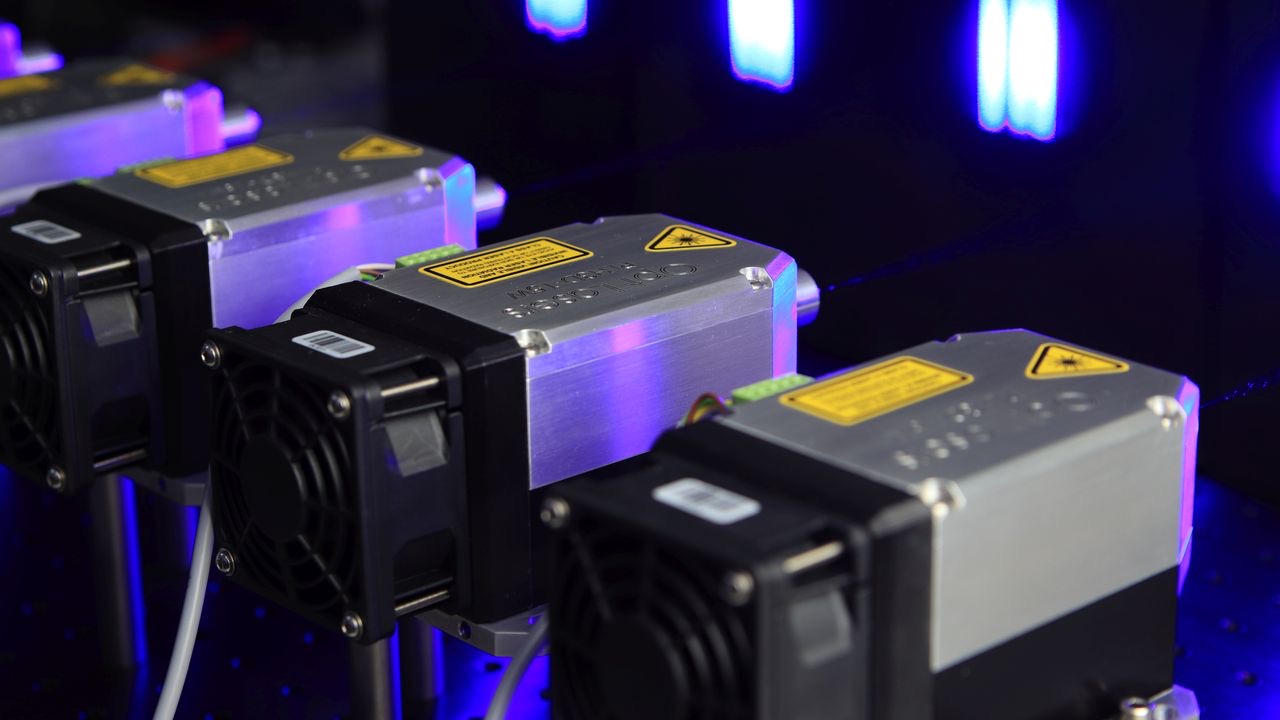
Most people who own a high-powered laser pointer have a reasonable awareness that pointing it at someone’s eyes is dangerous. Fewer understand why, or how quickly and at what distances the danger becomes real. The gap between “I know not to shine it at faces” and a genuine understanding of the risk matters when you’re handling a device that can cause permanent vision damage before the pain reflex has time to trigger a blink.
The physics of laser eye injury are worth understanding directly, not because high-powered lasers can’t be used safely — they can — but because the safety rules make more sense when you know what they’re actually protecting against.
Why laser light is different from other bright light sources
An ordinary bright light source — a flashlight, a lamp — emits light in all directions. The intensity at any given point decreases with distance because the light spreads out. At two meters, a flashlight beam covers a much larger area than at half a meter, and the energy per unit area (irradiance) drops accordingly.
A laser is different. The beam is coherent and collimated — it doesn’t spread the same way, so the irradiance doesn’t drop at the same rate. A laser beam that’s 3mm in diameter at the emitter might still be 5–6mm in diameter at 50 meters. The energy is concentrated in a very small spot regardless of distance, which is exactly what makes lasers useful for pointing and also what makes them hazardous.
When that concentrated beam enters the eye, the lens focuses it further onto the retina. The focusing effect means the irradiance at the retinal surface is dramatically higher than at the cornea — estimates range from 100,000 to 200,000 times higher, depending on the beam diameter and the eye’s focal length. A beam that’s relatively low intensity at the lens can reach damaging intensities at the point of focus on the retina.
How retinal damage happens
The retina contains photoreceptor cells — the rods and cones that convert light into neural signals — and supporting cells. These cells don’t regenerate in any meaningful way after injury. Damage to retinal tissue is permanent.
Laser damage occurs through two main mechanisms depending on the power level and exposure time:
Thermal damage is the mechanism for most injuries from higher-powered continuous lasers. The laser energy is absorbed by the retinal pigment epithelium (the dark pigmented layer behind the photoreceptors), which heats up rapidly. If the temperature rise is sufficient, the cells are denatured — the proteins that make them functional are destroyed. This happens in milliseconds at power levels well within the range of commercially available laser pointers. The blink reflex takes roughly 150–250 milliseconds to respond to a bright light stimulus; thermal damage from a sufficiently powerful laser can occur in a fraction of that time.
Photochemical damage is more relevant at lower power levels with extended exposure — particularly at blue and violet wavelengths. The energy initiates chemical reactions in the photoreceptor cells that produce reactive oxygen species, which cause cell death over hours or days. Photochemical damage is cumulative and less immediately obvious than thermal damage; someone might not notice degraded vision until well after the exposure event.
The power and class system
Laser safety standards use a classification system based on the maximum permissible exposure (MPE) — the highest irradiance that won’t cause injury under specified conditions. Class 1 lasers are safe under all normal conditions of use. Class 2 covers visible lasers up to 1mW, where the blink reflex provides adequate protection against brief accidental exposures. Class 3R and 3B cover 1–500mW, where accidental exposure is potentially hazardous, and Class 4 covers lasers above 500mW, which are hazardous for any direct or reflected exposure.
The complication is that laser pointer power labeling is frequently inaccurate. Many devices sold as 5mW measure considerably higher on calibrated equipment. Devices labeled as lower-powered classes sometimes fall into higher classes in actual output. This isn’t a theoretical concern — it’s consistent across consumer market testing of laser pointers and has been documented repeatedly by regulatory agencies in multiple countries.
A Laser Pointeur Puissant from a reputable supplier will include accurate power specifications and proper safety labeling. The specification matters for understanding the actual risk profile of the device you’re handling.
Distance does not make high-powered lasers safe
A common misconception is that there’s a safe distance from which a high-powered laser can be pointed toward people. The beam intensity does decrease with distance — the beam spreads slightly over long distances and atmospheric scattering reduces intensity — but for Class 3B lasers in the 100–500mW range, the nominal ocular hazard distance (NOHD) can extend to hundreds of meters. Pointing a 200mW laser toward a person 100 meters away is still a serious eye hazard.
This is why the aviation and aircraft incidents that make the news are possible — an idiot pointing a high-powered laser at an aircraft cockpit from the ground can expose the pilot to damaging levels of light from considerable distances. The physics don’t care about the intent.
Reflected beams and secondary hazards
Direct beam exposure is the primary risk, but reflections deserve attention. Specular reflections from mirrors, polished metal, glass, and other highly reflective surfaces can redirect a laser beam with nearly the same intensity as the original. Looking at a specular reflection of a Class 3B or Class 4 laser is approximately as hazardous as looking at the direct beam.
Diffuse reflections from matte surfaces are less dangerous — the energy is scattered in many directions, reducing intensity significantly. But even diffuse reflections from very high-powered lasers at close range can exceed the maximum permissible exposure. The rule of thumb is that any surface that looks bright under laser illumination is a surface to treat with the same caution as the direct beam.
Practical safe use
The rules for handling high-powered laser pointers aren’t complex, but they need to be habits rather than remembered guidelines:
Never point toward any person, animal, or moving vehicle, regardless of intended direction or estimated distance. The beam can reflect unpredictably, and distances are consistently misjudged.
Wear appropriate laser safety eyewear when working with Class 3B or Class 4 lasers at close range. Safety glasses for lasers are wavelength-specific — glasses designed for green lasers (532nm) don’t provide protection for blue lasers (445nm) and vice versa. The optical density rating on the glasses needs to be appropriate for the output power of the specific laser being used.
Store high-powered lasers with the emitter covered and preferably in a locked case when not in use. Accidental activation while the device is in a bag or drawer is a real scenario, and an uncovered emitter pointing at an unknown surface is an unnecessary risk.
When using outdoors at night — the context where high-powered lasers are most often legitimately used, such as astronomy and light shows — be aware of aircraft flight paths. In most jurisdictions, pointing a laser at an aircraft or its crew is a serious criminal offense with significant penalties, separate from the safety issue.
Storage
Laser pointers use lithium-based batteries in most cases, which have their own storage considerations. A high-powered laser stored in a hot car or exposed to high temperatures can experience battery degradation that affects both performance and safety. Store at room temperature, away from direct sunlight, with fresh batteries installed when the device will be kept in storage for extended periods.
The combination of understanding the mechanism, respecting the power class, and building consistent handling habits makes high-powered laser use genuinely safe. The risk is real but not mysterious — it follows predictable physics, and the precautions are proportionate to what’s actually at stake.